Showing posts with label Baptist. Show all posts

Friday, November 17, 2023

People of the Book?

Baptist were once known as "people of The Book" because we were always going back to the Bible to make sure of things.

How easy it is to drift away from what we've been taught.

We don't look to the Bible to see if "church" captures the true meaning of ecclesia - as it relates to the redeemed. Early English Bibles used "congregation" - no lazy talk about "going to congregation" or "don't miss congregation" that comes so easy when we use "church."

We don't look to the Bible to see if preaching is what elders are supposed to within the assembly of saints; whereas its TEACHING elders are required to do.

We don't look to the Bible to see if two or more elders are supposed to be in each congregation because we've become used to the lone ranger "pastor."

We don't look to the Bible to see if the 10th century AD Masoretic Manuscript is the best OT MSS.

We are looked at like we're from Mars if we do question such things. 

Wednesday, December 22, 2021

Mysteries Unveiled

Newest release from Baptist Reprints, Mysteries Unveiled - Redemption and Rule; two small books in one book. 

This book examines two widely disputed areas of doctrine: the particular redemption found in Christ Jesus, against the false notion that He died for every person; and the Law of Christ as the rule for the saints, against the false notion that we are saved by grace and walk by the Law of Moses.

Available on Amazon in paperback and Kindle.


Thursday, November 18, 2021

A Plea for Liberty of Conscience

In 1614, a poor Englishman published the earliest comprehensive apologetic for liberty of conscience known to be in print. 

This small book has been updated in grammar, vocabulary, and structure to be easier and more native for 21st century readers.

With nearly 300 footnotes, this is not merely one man's flight of fancy. It is a well written defense of a doctrine too many have lost sight of, drifting into being a disciple of the preacher or of thinking they have no responsibility to the fellowship to which they belong.

Pick up and read!

Leonard Busher's Religion's Peace


Saturday, November 6, 2021

Baptists and the Fifth Monarchy

Editor's Preface

The Lord Jesus was clear - His kingdom is not of this world (John 18:36). Yet Christians have been overly focused on worldly things since Peter tried to stop Jesus from going to the cross. Theonomic Reconstructionists believe Mosaic Law is to be forcibly imposed upon society, apparently oblivious to the covenant structure in Scripture which applies law given within a covenant to those in that covenant. Man does not have the authority to extract laws from a covenant without express warrant from Scripture.

But man tends to make his own rules, trying to redeem culture and make the world ready for Christ's return; putting himself in place of God. Every time this agenda is pursued, men claiming Christ use force of arms to gain support for their cause.

Baptists and our fore-runners have consistently resisted such movements, seeing the overlapping division God has instituted between His kingdom and the state. We participate in state affairs but we do not conflate the state with the spiritual kingdom to which we belong.

Louise Fargo Brown has written one of the best accounts of the political turmoil in 17th century England, with dozens of footnotes per chapter. It is not a difficult read, though it may be difficult to accept for those who think it our charge to claim the culture and country for God.

I think Christians are better prepared to live for Christ in our own time if we have some understanding of how they lived in our history. As the history of Israel was preserved, in part, so we would not sin like they did (1 Corinthians 10).We should be eager to learn from history outside the Bible for the same reason.

It is my prayer that my brothers and sisters in Christ will learn from those who have gone before and walk as wise children in this dark time.

For the kingdom of God and not that of man, I am your fellow sojourner and servant in Christ,

Stuart L. Brogden 

Buy here: Baptists and the Fifth Monarchy


Wednesday, July 7, 2021

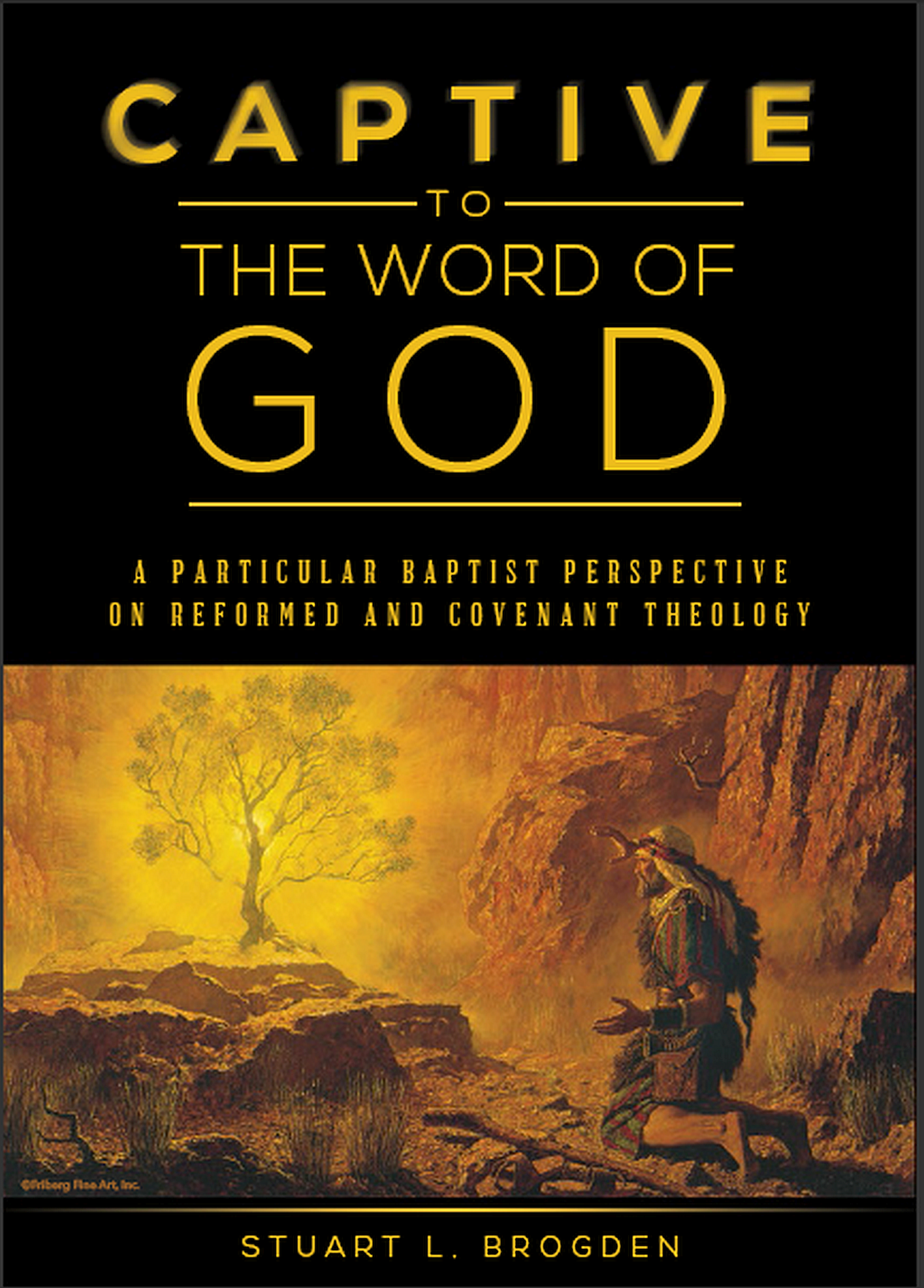
Captive to the Word of God - version 2

Version 2 of my book is now available in Kindle, paperback, and hardback! Changes from version 1 include a correction on a Scripture reference, modification on the use of "church" to describe the assembly of saints, and an additional appendix explaining how law and covenant do not transfer outside the covenant, the New Covenant has a new law. But though law ends as regulation, it continues as revelation and is useful to the saints, as is all of Scripture.


Available in Kindle, Paperback, and Hardback.


Sunday, June 20, 2021

From the Reformation to the USA

History from the Reformation to today in the USA. With a warning against Down Grade and an exhortation to walk humbly.


Sunday, May 23, 2021

The Danger of Formalism

This lesson was titled "The Origin and Significance of Infant Baptism." I should have titled it "The Danger of Formalism."

Perhaps the biggest problem facing the professing saints throughout history is the tendency to drift into a religious formalism, replacing the Spirit-filled Christian life to a spiritually weakened or dead life filled with rote traditions, denying the inspired instructions for how we are to walk as children of the light. With the doctrine of baptism, it is easy and disastrous to emphasize water baptism to the degree it displaces spiritual baptism. And replacing biblical water baptism with sprinkling water on the face of infants removes the mystery of the gospel scene and substitutes a religious rite that warms the hearts of parents.


Tuesday, May 4, 2021

Overview of Biblical Covenants

 A Baptist view of the covenants found that deal or are claimed to deal with the redemption of man.


Sunday, December 29, 2019

Elders and Deacons


1 Timothy 3:1-13 This saying is trustworthy: “If anyone aspires to be an overseer, he desires a noble work.” An overseer, therefore, must be above reproach, the husband of one wife, self-controlled, sensible, respectable, hospitable, an able teacher, not addicted to wine, not a bully but gentle, not quarrelsome, not greedy - one who manages his own household competently, having his children under control with all dignity. (If anyone does not know how to manage his own household, how will he take care of God’s church?) He must not be a new convert, or he might become conceited and fall into the condemnation of the Devil. Furthermore, he must have a good reputation among outsiders, so that he does not fall into disgrace and the Devil’s trap.

Deacons, likewise, should be worthy of respect, not hypocritical, not drinking a lot of wine, not greedy for money, holding the mystery of the faith with a clear conscience. And they must also be tested first; if they prove blameless, then they can serve as deacons. Wives, too, must be worthy of respect, not slanderers, self-controlled, faithful in everything. Deacons must be husbands of one wife, managing their children and their own households competently. For those who have served well as deacons acquire a good standing for themselves, and great boldness in the faith that is in Christ Jesus.

Paul begins and ends this passage with commendations for those who aspire to serve as elders or has served well as deacons; it is a privilege to serve in either role. He describes these two roles within the local fellowship of saints, both having very similar qualifications, but very different roles (which are explained elsewhere in Scripture). Both are described as servants with responsibility, not rulers with authority. The Bible has authority in the church; the men do not.

The Apostles, forerunner of church elders, were to devote themselves to prayer and the preaching of the Word; deacons are to tend to the physical needs of the dynamic and diverse body of Christ. In Acts 6 the people did not vote for who would serve as deacons; they nominated seven godly men to the Apostles, who appointed the men to serve. This passage does not show a democracy in action as many Baptists falsely believe. It shows the active participation of the members, recognizing the role of those God had appointed to lead them. As the church matured, the Scripture shows us that elders had oversight on all the church did and deacons provided much more service than “waiting tables.” As there are spiritual issues behind every temporal matter a deacon might be called upon to help with, these men must be qualified and there must be a good rapport between the deacons and elders, so the body of Christ gets the best care possible.

Deacon. The Greek (diaconos) and English words refer both to one who serves the local church in this capacity as well as those who are simply known for being servants to the body of Christ. Deacons are not required to be spiritual guides, feeders of the flock, or teachers; they are required to be trustworthy and of moral character as they deal with matters of temporal importance and the related spiritual foundations. The health of the church depends on deacons functioning well, which requires the cooperation of the elders and the people. It is painfully apparent that many of us have lost sight of the completeness of the wisdom our Lord has provided us and the reason for it. How we serve Him and one another is be to the glory of His name and the good of His people.

Robert Boyt C. Howell laments “much confusion and division of sentiment regarding the nature of the office”; and he points out how so many miss the Scriptural teachings that describe the role of those who hold the office of deacon.

Nearly all the churches have made them ministers of the gospel. In the Roman Catholic church he is an inferior ecclesiastic, the second in the sacred order, who, with the permission of the bishop, has authority to preach and baptize. In the English church the Deacons are clergymen, but of the lowest grade; who can perform all the offices of priests, except the consecration of the sacred elements and the pronouncing of the absolution. In the German Protestant churches, when more ministers than one in the same congregation are necessary, the second, or assistant minister, is called the Deacon; and if there are two assistants the first is called the Arch-Deacon. In the Presbyterian church, the office is commonly merged with that of ruling elder, and, therefore, mostly disused. Where it is still retained, it embraces, as among Congregationalists and others, merely the distribution of alms. The Methodist and Episcopal churches in this country adopt, substantially, the practice of the English church, of which they are descendants. In the Baptist churches, the Deacons are not ministers who preach, on the one hand, nor mere distributors of alms on the other, but serve in a different capacity. They are a board of directors, and have charge of all the secular affairs in the kingdom of Christ

It is not unusual for Baptist deacons to have hire & fire authority over elders (a corollary error in this circumstance is the absence of a plurality of elders). In the end, nobody escapes unscathed! This all-too-common Baptist practice is blatantly taken from the modern business world, and puts the lower office of deacon as overseers of those called of God to be overseers, turning Scripture on its head.

We need to ask, is the Bible so unclear on the nature and duties of the office of deacon? Brothers, this is not the case! It is sin that keeps God's people from seeing clearly, not a lack of clarity in God's Holy Word. We must abide by what the Book reveals, and guard against traditions not found therein. If Scripture is not our guide, we are adrift on the sea of man's wisdom; and that is dangerous.

The qualifications of deacons differ from those of elders on the single requirement of elders, but not deacons, being able to teach the Word of God. Deacons are to be men of good reputation, full of the Holy Spirit, holding the mystery of the faith with a clear conscience. These bedrock character traits often neglected when selecting deacons, as people focus on the man's record of financial giving, business acumen, and abstinence from alcohol. While those traits can be easily measured, they cannot be found in the Bible as qualification for this office. The traits found in Scripture are not so easily quantified. It takes serious thought and hard work to determine if a man has a good reputation among his neighbors and work colleagues. It takes time and discernment to see if there be evidence of the Holy Spirit in a man. Who wants to put a man on the spot and see if he holds the mystery of the faith with a clear conscience? Can you even explain this requirement, much less investigate it? Installing men to serve the local church as deacons is sober work, not to be taken lightly or without serious prayer and reflection.

A deacon must be the husband of one wife. The literal meaning of the text is "a one woman man" - which means that if there was a biblical divorce and subsequent marriage, the man is not disqualified. If one holds that no divorce is biblical, the on-going sin in a second marriage becomes an on-going problem within the body. I see 2 reasons in Scripture wherein YHWH permits divorce, for unrepentant adultery or for abandonment by an unbelieving spouse. The goal of marriage is for each to last until death parts the couple. But even redeemed saints can fall into sin and be stiff-necked for a season; and the One Who knows our frailty has provided a narrow window - much narrower than in the Mosaic Covenant.

The requirement that deacons be tested first gives us a hint that we should invest the time and energy in examining would-be deacons; and not merely assuming these traits be theirs. This testing also provides the opportunity to see if his wife is sober minded and faithful, if his children are “managed well”. We must exercise the full measure of the biblical text to prove the men who would serve as deacons; they are care-takers of God's sheep and co-laborers with His under-shepherds. This is a high calling (those who serve well gain a good standing) and we cannot allow our lazy human minds to rest on our own wisdom, or the taking of shortcuts or reliance on the traditions handed to us by other men. Finding men who tithe and do not frequent bars is wrong-headed and too low a bar for the office our Lord established for the temporal care of His redeemed.

As we desire our men to provide for their families, spiritually as well as physically, our deacons are to help families in each arena, with boundaries in both. Neither the church nor either office therein can unreasonably meddle with a family. God has established three spheres in this age, with specific roles and limits. It's been said that to the state God gave the sword, to the church He gave the keys to the kingdom, and to the family He gave the rod of correction. We should not cross these boundaries without a clear biblical basis. Wisdom and care is needed if we are to tend to God's people without ruling over them as "Gentiles" tend to do.

Healthy church members let their deacons know ahead of time when they will miss, and explain why. They will be more inclined to assemble with another local body while away if they properly understand church membership. This exercise of membership responsibilities is representative of any number of other earthly matters that deacons are likely to get involved with, each of which most often reflects the spiritual condition of the person. Lack of attendance and interest in church life, neglecting to worship in giving money, and many other concerns can be prompted by earthly things: illness, loss of work, death in the family, etc. In order to be wise stewards of the office, deacons must not presume to know the cause without investigating it, learning from Job who investigated the cause of what he did not know (Job 29:16). This keeps us from the sin of presumption and all that tends to follow closely behind.

As we examine men who would and do serve in our churches as deacons; as we consider how we determine the role of the office and how we select these men, let us humbly petition our God for wisdom and grace to do what is right in His sight - aligned with His scriptures and not resting on our own wisdom.

Elder. This role can only be fulfilled by a qualified man who is called and equipped by God for this service. There is no possible interpretation that allows self-identified or unconverted men, or women to serve in this capacity; and yet many churches do just this. This latter error is always the first big step to total apostasy for a church, preferring fallen man's view of order over creator God's declared view.

As mentioned earlier, the only different qualification for this role is that an elder must be able to teach. In our English Bibles we see the words Elder/Presbyter, Overseer/Bishop, Shepherd/Pastor. Each pair of these words comes from one Greek word; Elder/Presbyter is from presbyteros; Overseer/Bishop from episkope; and Shepherd/Pastor from poimen. They are used interchangeably and they all refer to a single office in the church which has several important functions, each of which is designed by the Lord to insure the health of each local church. The terms elder and presbyter refer to a man’s experience; in the Word and in the church. Overseer and bishop convey the act of being a spiritual guardian or protector, while pastor and shepherd refer to the spiritual care and feeding of God’s flock. We see overlap among these three functions in 1 Peter 5:1-5, where elders are exhorted by the Apostle Peter to shepherd God's people with the right motive and attitude, serving as examples for the less mature Christians. In Acts 20:28, elders are instructed by the Apostle Paul to pay careful attention to themselves and the flock of God, in which the Holy Spirit made you overseers, to care for the church. One aspect of being a faithful elder that is implicit in these passages is that of being among the saints, knowing them as a shepherd knows his flock and being known as the shepherd is by the sheep. A man who does not live among his church members, who lives at a higher station of life, who spends all his time with other preachers is not faithful to his call. The elder must be an able teacher of the Word (1 Timothy 3:2, Titus 3:1-8) and a diligent servant of God's people (1 Timothy 5:17 & 18).  He must also be able and willing to rebuke those who contradict the Word of God within the local church (Titus 1:7-9), and he must be about training others to work alongside him as under-shepherds of Christ (2 Timothy 2:1-3). One who would hold this office must lead the church, serving as a proper example (2 Thessalonians 2:11 & 12; 2 Timothy 2:15), and the saints are commanded to submit to them, not being burdensome for them (Hebrews 13:17). Elders were given to the church, by God, to equip the saints for the work of the church, bringing them to maturity and the fullness of Christ so they would not be vulnerable to the deceptive schemes of the enemy (Ephesians 4:11-14). This means the biblical elder must feed God's sheep the whole counsel of His Word, not trusting his opinion or theirs as to what is true nor picking some Scriptures from which to teach and ignoring others. His teaching is to be tested in light of Scripture; not accepted nor rejected by personal whimsy or blind friendship. All of these responsibilities of elders are beyond any man's abilities, so the Bible reminds us that elders, like the Apostles who preceded them, must be men of prayer (Acts 6:4).

There is another requirement of the man who would serve as an elder. While some read 1 Timothy 3:2 to mean a single man cannot serve as an elder, the view most compatible with Scripture is that an elder who is married must be in a biblical marriage and work at keeping it. Elders must be one-woman men, and they must lead their churches to defend marriage in the face of reprobates. 1 Timothy 3 goes on to say the elder must be sober minded and not quarrelsome; all the more so in defending God's people from unrighteous men, who by their unrighteousness suppress the truth (Romans 1:18).

Being God's spokesman is no job for a new convert, one who is unsure of God's Word, unwilling to proclaim God's Word, unable to rebuke those who contradict God's Word, or unworthy of being followed as God's servant. The times in which we live are treacherous, with many professing Christians embracing abominable sin in order to be well thought of by those outside the camp of Christ. Christians are never to compromise God's truth for the applause of men (Galatians 1:10) and elders must be held to a high standard so that the Lord's name not be disgraced among the pagans and the local church not be led astray.

Ezekiel 33 & 34 describes watchman appointed by God with responsibilities to warn, guard, and care for the people of God. In these two chapters we see a contrast of the watchman with the shepherd: the watchman warns, the shepherd tends. In each passage, unfaithful watchmen and shepherds are contrasted with those who are faithful. Ezekiel 34:1-10 describes the failures of the leaders of Israel, showing what shepherds are supposed to fulfill. Shepherds are supposed to care for the flock. These men were feeding on the sheep; fleecing the sheep. These men had all the appearance of shepherds, but they were wolves. Pastoral ministry is hard work, not glamorous. Those who pose as celebrities, living the high life, are not pastors. Pastors should smell like sheep, walking in the mud and mess, scarred by the teeth of biting sheep. This is difficult but rewarding work. Every man should aspire to be a commendable man who leads his family as a shepherd leads the flock. He must diagnose and treat appropriately – you don't strengthen the stray, you strengthen the weak; you don't bind up the lost – you search for the lost. Each spiritual condition requires the correct spiritual remedy. The pastor must know illnesses and the people, else he cannot properly treat the sheep. Verse 10 in Ezekiel 34 shows the omnipotent hand of God rescuing His sheep from the teeth of the wolves. A true pastor will watch the flock like a man who must give an account to the God who has purchased the sheep with the blood of His own son. Because that is what God's Word tells us the truth about those who would call themselves “pastor”.

Even with the best of intentions, we can go astray from the narrow path of biblical truth. Over time, man has developed unbiblical structures, imagining that Bishop is more honorific and must carry more responsibility (by which they mean fame). Most men who preach call themselves “pastor” regardless of whether they shepherd the flock God has gathered there or not. One who preaches but does not work to know and care for the saints the Lord has put under his watch cannot rightly call himself pastor; he is merely a preacher. These words are not titles by which the men who serve are to be called, but descriptions of service they provide within the local church. Because God has given these terms to describe the roles of men He calls to the office, we must be careful to use them correctly.

Plurality of elders. Most churches in every denomination and across the spectrum of Baptists miss the point of Scripture on this point. The Bible repeatedly shows us that even the early churches that met in houses had two or more men serving as elders, a plurality of elders.

Acts 14:22&23 – Paul and Barnabas had traveled to Antioch, Derbe, Iconium, & Lystra, where they strengthened the souls of the disciples, encouraging them to continue in the faith, and saying that through many tribulations we must enter the kingdom of God. And when they had appointed elders for them in every church, with prayer and fasting they committed them to the Lord in whom they had believed.

Acts 20:17 – Paul passed by Ephesus to Miletus. Now from Miletus he sent to Ephesus and called the elders of the church to come to him.

James – Was written to the churches resulting from Saul’s scattering of the saints (1:1), this letter shows elders in the local church (5:14).

Philippians is addressed (1:1) to overseers (elders) and deacons in that church, in addition to the entire congregation.

Hebrews recognizes leaders (elders) in that congregation (13:7, 17, 24).

1 Tim – Timothy was recognized by the elders of his church for his calling as an elder (1 Tim 4:14) and a plurality of elders is seen again in 5:17.

In large and small fellowships, having only one elder can lead to a kind of “cult of personality” as a solitary man is seen as the public face and voice of that church. One man alone, coping with a job, his family, and the ministry is vulnerable to being drawn aside by pragmatism in what may start as an innocent desire to do all things well and unto the Lord but which soon go astray. If the saints YHWH has gathered and gifted in the local church (1 Corinthians 12:4-11) are encouraged to serve the body, those serving as elders and deacons will have a much lighter load and the local church will marvel to see the Lord working in their midst!

Having two or more men who preach and teach provides several benefits, in addition to aligning with the examples and teachings from Scripture (Acts 11:27-30; 14:21-23; 20:7; Titus 1:5; James 5:14; et. al.). Two or more men can sharpen one another and hold each other accountable, while the church sees the true Shepherd more clearly when they see Him work through more than one man. The church will see strengths and weaknesses in each man and those men will have the opportunity to be examples of how to serve in unity without letting egos derail the ministry. As they seek to identify others and train them for this service, more men will have opportunity to serve the saints in myriad ways. This is part of life in the body of Christ that is vital and often undervalued. It is not, as one man said to me, a matter of money. It's a matter of caring for the people of God as He has shown us.

Baptists used to be known as "people of the Book." This topic of deacons and elders is one where many Baptists discard the Book and cling to traditions handed down by men. Brothers, this should not be so! We are servants with responsibility. The Bible is our only authority for life and godliness. We are to seek His will, revealed in Scripture, and not rely on our own wisdom or traditions.

Sunday, April 14, 2019

Water Baptism


There are some comments and teaching in the audio not contained in the notes below.


Water Baptism

Baptists baptize believers – by submersion. We're in the minority. Denominations that practice "infant baptism" include Roman Catholics, Eastern and Oriental Orthodox, Anglicans, Lutherans, Presbyterians, Methodists, some Nazarenes, the United Church of Christ (UCC), Moravian Church, Metropolitan Community Church, Wesleyans, and Episcopalians. There are some who believe baptism is salvific – Church of Christ, Disciples of Christ, and those who hold to Federal Vision.

Baptists used to be called “people of the book,” resting on the sure foundation of Scripture and submitting to the authority of Scripture. If we are not tenacious in this matter, we are vulnerable to smooth sounding arguments that end up becoming traditions that cannot be questioned. Just as has happened for those who sprinkle little ones. I do not want to spend much time explaining why the paedobaptist view on baptism is wrong, I will appeal to a few of their finest theologians to tells us they are wrong.

John Calvin: “John and Christ administered baptism totins corpore submersione, by the submission of the whole body … The very word 'baptize' … signifies to immerse entirely, and it is certain that immersion was the practice of the ancient church.”

Martin Luther: “The Greek word baptizo means 'immerse' or 'plunge', and the word baptisma means immersion.”

Ulrich Zwingli: “Immersion of the whole body was used from the beginning, which expresses the force of the word 'baptize', whence John baptized in the river. It was afterward changed into sprinkling, though it is uncertain when or by whom.”

And the great B.B.Warfield: “It is true that there is no express command to baptize infants in the New Testament, no express record of the baptism of infants, and no passages so stringently implying it that we must infer from them that infants were baptized.”

These four giants of the Reformation and the development of Presbyterian theology unabashedly tell us their position is not based on the Scriptures. It’s what I call “white space theology” – derived from the spaces between the words in the Word; what they call "good and necessary inference." When did this great controversy over baptism start? If believers' baptism is what the Bible teaches, why and when did people start baptizing babies? History records the creeping ignorance and superstition that led to this practice and the religion which institutionalized it. In the 3rd century, some people in the church became convinced that baptism was meritorious and had a magical power to help save the soul. At first, people only baptized infants who were sick – as an insurance policy. Quickly, all infants were baptized, sprinkled instead of dipped – for their physical health. Church men began to argue over when the infant should be baptized – saying on the 8th day? Others argued it ought be delayed as long as possible so that more sins would be covered. Such was the case with Constantine, who refused to be “baptized” until he was on his death bed. Lack of knowledge and trust in the Word of God leads men astray, to trust in the imaginations of men. Something that divides people for centuries, shedding no little blood, ought to be based on clear teachings from Scripture - not inferences needed to support that which is not found clearly taught.

When Christianity was legalized, the church, already suffering from an unhealthy view of “holy clergy”, saw infant baptism as an effective way to number the people so they could be taxed and controlled. And to convince the ignorant masses, these compromised churchmen played up the false notion that baptism plays a part in saving one's soul. This is called Sacerdotalism – using a sacrament (a religious rite) as a means of conveying God's favor to the people. When the Reformation broke out, some were called Magisterial Reformers – they maintained the close connection between church and state. One of these, Zwingli, was stuck between his belief that the Bible commands believers' baptism and his practice, which was more than a thousand years old, the union of church and state and control of the people by infant baptism. So he persecuted those who did not practice what the state commanded because he feared the people. Such is the power of our unexamined presuppositions and the influence of the culture. We must be people of the book!

In the early 17th century, the Puritans fled England in search of religious liberty. They had been persecuted because they believed in salvation by grace alone, through faith alone in Christ alone and they were persecuted because the state church held to a sacerdotal view. Yet they, like Zwingli, failed to escape the trap they fled – they brought it with them, just like Lot did when he fled Zoar. Baptists also fled to the New World to escape religious persecution. In a report, Ill News from New England, early American Baptist John Clark records how he, Obidiah Jones, and John Crandall were arrested because they had discussed baptism over dinner at a boarding house. These three were hauled before the court in Boston, found guilty of not honoring the state religion. They were beaten, fined, and thrown in prison. The Puritans had established state churches in the colonies and they persecuted those who did not agree with their religious views – just like the Church of England which persecuted them. Our theology affects how we live, just as it did these Puritans and these Baptists.

With that brief historical backdrop, I want to explore the deepest meaning of this ordinance. Why is baptism – baptism of believers – important? What does it signify?

We know what Romans 6:4 says, we rightly hear it every time a child of God gets baptized - We were buried therefore with him by baptism into death, in order that, just as Christ was raised from the dead by the glory of the Father, we too might walk in newness of life. This gives us a picture of what has been done to us, that as the Lord Jesus was put to death and raised up, so are we. This is an important truth that we must never forget. But I hope we open our eyes to the greater meaning of this simple ordinance and pray that we see together what a glorious picture has been given to us by our great and gracious Lord.

As with most important truths from Scripture, the spiritual significance of what God has revealed is far, far greater than we at first comprehend. Unless we dig into the Word and pray for wisdom, we may not get to the place where we see more and are given even more reason to humbly thank our God, in awe of Who He is and what, in truth, has been done.

I highly recommend a small book by Baptist Pastor Hal Brunson, titled The Rickety Bridge and the Broken Mirror, a book of parables about baptism, which is most helpful.

The metaphor in Romans 6:4 gives us the active or present reality of the meaning of Christ's death, that introspective reality of the first resurrection, when we die to sin and are raised to new life. But this verse and the act of baptism also point back historically to the death of Christ and prophetically forward to the physical resurrection of all the saints when He returns to judge all flesh. Baptism is a multifaceted word picture that ought to remind us of far more than the glorious change wrought in the life of the redeemed sinner. One aspect of baptism that baby sprinklers cannot lay claim to is baptism as a picture of submersion into great waters, portraying the great waters of Divine judgment. We see in Scripture several passages where great waters are graphic symbols of God's judgment and wrath against sin – which Christ took upon His body as the Lamb sacrificed for our sin. He was submersed into the ocean of God's wrath on our account, and raised up on the third day. There are at least four major word pictures used in Scripture that describe baptism.

  1. The flood of Noah.
  2. The sorrows of David, described as “great waters”.
  3. Jonah being cast into the sea.
  4. Jesus' understanding of His death.

The Apostle Peter points to this great flood of the entire earth as a vivid picture of the believer's baptism as well as a figure or type pointing to the suffering of Christ. In proclaiming (1 Pet 3:18) that Christ also suffered once for sins, the righteous for the unrighteous, that he might bring us to God, being put to death in the flesh but made alive in the spirit, Peter then alludes to the flood and how only 8 persons were saved in the ark, brought through the great waters of God's judgment against sin. And Peter goes on in his first letter to tell us that baptism corresponds to this – the flood of Noah, the outpouring of God's wrath in judgment and the only refuge being in the ark which is Christ. In 2 Peter, the flood is listed with another well-known symbol of God's wrath against sin – Sodom and Gomorrah. God's wrath against sin is real, it is certain, it is final. We need a savior, One Who can bear up under this wrath, One Who has no sin of His own to atone for. Not only did Christ provide refuge from God's wrath, He was buried in God's judgment as payment for sin. He is worthy of our praise.

What about the sorrows of David? This man after God's own heart knew of his own sin and the despair of trusting in any mortal man for reconciliation with Holy God. David and other Psalmists described their deep sorrows as a kind of burial beneath the billows and waves of the Almighty. In Psalm 42 we read, Why are you cast down, O my soul, and why are you in turmoil within me? In this sorrowful lament with his soul, he describes his afflictions in terms that point to baptism - Deep calls to deep at the roar of your waterfalls; all your breakers and your waves have gone over me. Three images of water – waterfalls, breakers, and waves – all communicate the idea of a cascading waterfall pummeling the poet, with the brutal breakers and waves of an angry ocean violently washing over his head. These terrifying metaphors of his torment and anguish wash over him, drowning him in his sorrows. Carried along by the Spirit of God to write these things, perhaps the Psalmist knew not that he prophesied of the promised Messiah, but his words anticipate the sufferings and death of Christ as a kind of baptism. The word for deep in the psalm is used as a synonym for sheol, connecting to the death of Christ as a submersion into the deepest waters of sheol. And the water metaphors in this psalm undoubtedly describe the suffering servant of God - Psalm 42:10  As with a deadly wound in my bones, my adversaries taunt me, while they say to me all the day long, “Where is your God?” This is widely recognized as prophecy of the Lord's sword-pierced side and the cruel mockery of those who blasphemed while He hung on the cross.

David's description of his soul's suffering in deep water takes us more deeply into the sufferings of Jesus. As did the high priest of Israel, we are brought through the first veil, the holy place of Christ's impeccable flesh, gazing upon His physical sufferings; and then through the second veil into the holy of holies, to the very heart of Christ, where we see the spiritual anguish of the Lamb being under the rod of God's wrath. In Psalm 18, David wrote about his persecution at the hand of Saul – but the eternal message of redemption contained in all of Scripture here portrays the Savior's passion, not David's sorrow; death and hell as the persecutor of Christ, not Saul chasing David. The king of Israel describes his trials in terms of sorrow and death and hell which have a human and a divine cause, stark images of his soul's baptism into the lesser sea of man's wrath and the greater ocean of God's wrath. David is immersed in human wrath, Saul's rage is real. But David's words tell of God's judgment on sin and care for His people. Psalm 18:7-17 Then the earth reeled and rocked; the foundations also of the mountains trembled and quaked, because he was angry.  Smoke went up from his nostrils, and devouring fire from his mouth; glowing coals flamed forth from him. He bowed the heavens and came down; thick darkness was under his feet. He rode on a cherub and flew; he came swiftly on the wings of the wind. He made darkness his covering, his canopy around him, thick clouds dark with water. Out of the brightness before him hailstones and coals of fire broke through his clouds. The LORD also thundered in the heavens, and the Most High uttered his voice, hailstones and coals of fire. And he sent out his arrows and scattered them; he flashed forth lightnings and routed them. Then the channels of the sea were seen, and the foundations of the world were laid bare at your rebuke, O LORD, at the blast of the breath of your nostrils. He sent from on high, he took me; he drew me out of many waters. He rescued me from my strong enemy and from those who hated me, for they were too mighty for me.

But as God did not leave David's soul in torment, neither would He suffer His Holy One to see corruption, as Christ was not left buried beneath the sea of God's wrath and the ocean of His judgment. As David cried out in his distress and called upon the Lord from beneath the deep waters of his sufferings, so also the Savior, as it were, from beneath the burning waters of the cross, (Matthew 27:46) Jesus cried out with a loud voice, saying, “Eli, Eli, lema sabachthani?” that is, “My God, my God, why have you forsaken me?” As deep calls to deep, the Almighty heard the voices of David and David's seed, and thus He bowed the heavens and came down, riding on a cherub and flying on the wings of the wind; God answered the cry of His Son and sent from above and drew Him out of many waters.

The sorrows of David and other psalmists resonate with all who suffer, but they point us to the One Who suffered what we deserve, to bring many sons and daughters to glory. The love of God for His elect caused the Son of God – David's promised seed – to submit to the baptism of His Father's wrath, so we who are called by His name would be reconciled to our Father and not be left to our just deserts.

When we baptize a new convert, we are not drinking His cup, but we bapize in remembrance of what He did – to cut the New Covenant in His blood to reconcile sinners to Holy God. Paul asks, Do you not know that all of us who have been baptized into Christ Jesus were baptized into his death? (Rom 6:3) And further he tells us, (1 Corinthians 12:13) For in one Spirit we were all baptized into one body—Jews or Greeks, slaves or free—and all were made to drink of one Spirit.

Oh, the Savior’s love for His Father – and all those He chose to redeem in Christ! Baptism – it's an ordinance which shows how spiritually dead people have been raised to new life in Christ. But, oh my dear brothers and sisters – it is much, much more than that. I pray you got a glimpse of a better picture of the grand and glorious sacrifice of our Lord and Savior was prophesied and pictured in various ways as a baptism into God the Father's judgment. The price He paid and the suffering He took as He drank the cup of wrath due us, summed up the submersion and emersion as one is plunged beneath the waters of baptism and raised up from the deep as did our Savior. Let us never see baptism as only the celebration of a new-born brother in Christ, and not ever the mere sprinkling of water over a little one who knows nothing and fears not the sprinkled water. Let us always remember the One Who was baptized in a way you and I could never survive. Christ paid the price we could not pay. He drank the cup and underwent the baptism we could never do. Every time we see this ordinance, let us think on His sacrifice, His obedience, His submission. And let us be thankful we have a faithful God Who did not allow His Holy One to see corruption – that we would have the firm hope of life eternal. We were buried therefore with him by baptism into death, in order that, just as Christ was raised from the dead by the glory of the Father, we too might walk in newness of life. It is a glorious picture of our Redeemer, but we won't know that if we are not people of the book!

Thursday, March 14, 2019

One Lord, One Faith, One Baptism

There are some brothers in Christ who are so focused on the local assembly of saints that they deny there is any congregation of a universal manner; that is, comprised of all the redeemed from every generation. This focus includes an emphasis on water baptism, to the exclusion of what John foretold - that One was coming who would baptism with fire and the Holy Spirit (Matt 3:11).
One passage that is said to be only about water baptism and the local fellowship is Ephesians 4, where we find this: Ephesians 4:4-5 (ESV) There is one body and one Spirit—just as you were called to the one hope that belongs to your call— one Lord, one faith, one baptism,
The context of this short passage should shed light on whether it is all and only about the local assembly and water baptism or if it's about something greater.
We know that Paul's letter to the saints at Ephesus was meant to be read to many local assemblies; it's a universal letter to the body of Christ. In the first three verses of chapter 3, Paul stresses identity in Christ and the unity of believers - dealing with one another in humility, gentleness, patience, and so on.
And then we find this: Ephesians 4:4-7 (ESV) There is one body and one Spirit—just as you were called to the one hope that belongs to your call— one Lord, one faith, one baptism, one God and Father of all, who is over all and through all and in all. But grace was given to each one of us according to the measure of Christ’s gift.
This letter reveals Paul's passion for all the saints to understand the unity we have because of our union with Christ Jesus, proclaiming there is one body, one Spirit, one hope, one Lord, one faith, one baptism, one God and Father of all. By this union with Christ we each have been given grace according to His gift.
Is there ANYTHING in this passage that hints Paul was addressing only the local assembly or numerous assemblies of saints? Is he not making much of the fact that ALL the saints share in these things, without regard to any temporal circumstances? One body, not numerous local bodies. One Spirit, not a separate Spirit for each locale. One hope, one Lord, one faith, one God and Father of ALL. This speaks to all saints in all locations and all generations. And one baptism.
Water baptism makes no one a child of God. The lack of water baptism keeps no one out of the kingdom of God.
But that baptism John mentioned, the baptism of the Holy Spirit and of fire, corresponds to the circumcision made without hands (Col 2:10-11). This baptism is what brings enemies of God into His kingdom as His friends and children; without this baptism, no one can enter into His domain.
As much as these brothers resist and insist, there is no argument that can be made from Ephesians 4 that restricts Paul's message of union and unity to the local assembly only. They can only make assertions in support of their view. Paul’s concern as an apostle was for the whole body of Christ, redeemed saints from every nation, tribe, and tongue. To deny this universal intent is to constrain the love of God for His people to clumps here and there, denying the communion we have through the Holy Spirit to all the saints.
It's too small a view of God's work and of His body.

Sunday, January 6, 2019

Luke 5:12-16, The Poor and the Prideful


The Poor and the Prideful, Luke 5:12-26


Matt 5:3  “Blessed are the poor in spirit, for theirs is the kingdom of heaven.

I. vs 12-14: Introduction - Spiritually poor leper
Jesus was in a town in Galilee. He had been teaching large crowds and had publicly called 3 men to be His disciples. While in one of these small towns, an outcast from society - a man with a serious skin disease all over him. Leprosy was the term used to describe numerous skin conditions, including leprosy. But all were treated as contagious and kept out of the covenant community. He saw Jesus, recognized Him, fell on his face and begged Jesus to make him clean. IF He - Jesus - was willing. This man was a Jew and cared not that Jesus didn't fit the Jewish expectations of their Messiah. He was poor in spirit and wanted the cleansing that only comes from the true Messiah. Yes - and Jesus, who learned obedience as a man, was vulnerable. But He came for such as this one. And for you and for me. Oh, praise Him!

This outcast begged Jesus to cleanse him, if He would. Jesus reached out and touched the man - he probably hadn't been touched by another human in years. Note how different from every common expectation He was. Not aloof, prideful, condescending, self-promoting. He listened to this man treated as a sub-human, probably looking him right in the eye, touched him - conferring humanity upon this beggar! And Jesus tells him the most marvelous thing: I'm willing; be made clean!

Now what does a person who has won a million dollars do? Most people go tell everyone they know. This Jewish leper was lifted up from the debris where his kind were forced to live, treated like a human, and cleansed! He was told to "go and show yourself to the priest, and offer what Moses prescribed for your cleansing as a testimony to them." This leper was a Jew. But He did not care whether Jesus met the Jewish expectations for a political savior; he wanted to have life! “IF you are willing …” This leper KNEW salvation and cleansing was of the Lord, if He wills!, and not of man. Mark’s account, chapter 1:39-45, reveals that this man went from Jesus talking freely to everyone about what Jesus had done for him (page 1895).

Such was the fame that was swelling up around this man who heals!

II. vs 15-16: Not of this world
Contrary to what many people in our day think, large crowds of people are not necessarily a good thing. As many as 40,000 flock to see and hear Joel Osteen each week; never hearing the gospel, but they're told their destiny is to be healthy and wealthy in this age. Jesus was not teaching that message. His kingdom is not of this world; the world will hate you as it hated Him; ALL who follow Christ WILL suffer. And people from everywhere thronged to get a glimpse of this man, to hear a word from Him; to be cleansed. From this point forward, His whereabouts were fairly well known. People were looking for Him. How many accounts are there in the New Testament that tell us of the large crowds that followed Jesus; and how many of them end with a rebuke for wrong motives?

In our passage, He removes Himself from the crowds, as He often did; seeking a place to commune with His Father. The approval of the crowds was not what He sought; the approval of His Father was the goal. The Christian gets encouragement from other saints, but we dare not seek applause or disciples for ourselves. Every one of us should seek the approval of the One Who is self-approving. The Lord Jesus has always been in close communion with the Father. But since taking on flesh, since adding our nature to His, He also had human needs during His first advent. He grew and learned and ate and grew tired. His food was to do the Father's will (see John 4:28-34). Prayer is communion with God. The human nature of Jesus desired the close communion He had always had in the spirit. It is the Father's will that we spend time in prayer with Him. Not so much asking for things (which is not necessarily bad), but merely seeking closeness with him, admitting our need and His sufficiency. This type of prayer builds up the souls of the saints. This is the example our Lord gave us.

III. vs 17-20: Spiritually poor people, not those looking for bread to fill their bellies
Verse 17 describes "one of those days." The Lord Jesus had been going from town to town preaching the kingdom of God, healing people, filling some bellies. Once again, leaders from the Jewish community were gathered - along with scores of people from the villages in the region - from Galilee, Judea, and Jerusalem. A LOT of people, from some distance. A crowd, wanting to hear, waiting to see who would be healed.

Luke includes a very curious statement, And the Lord's power to heal was in Him. Here is revealed one aspect of His earthly ministry that He spoke clearly of in John 5:30 (page 2032). This shows us the closeness amongst the persons in the Trinity - no rogue members, all in total agreement.  As the Messiah was one prophesied to bring healing to Israel, so Jesus came to heal physical Israel physically as a revelation of the spiritual healing He was bringing to spiritual or true Israel.

Many a sermon has been preached on the determination and faith of these friends. That ain't the main point. The main point of this passage is that Jesus has come as promised, to deliver the poor in spirit to freedom. These men who brought their friend to Jesus were not after food; they desired their friend to be healed. This was a genuine hunger for the goodness of God, for Jesus saw that they had faith in Him! All the other people were sitting, waiting for Jesus to perform. These 4 “took the kingdom by force” in making a hole in the roof and lowering their friend to where Jesus was. We know this faith was not merely in Jesus as physical healer because Jesus’ response to them was directed at the man’s soul – seeing their faith, He said, “Friend, your SINS ARE FORGIVEN.” In the scene of the 10 lepers, Jesus first heals the body of all of them and then heals the soul of the one who returned to give thanks. Here, He first heals the soul of this man – your sins are forgiven. The lesson in this passage is all about putting spiritual things first.

We know from the biblical accounts of other miracles – the feeding of the 5,000 for example – that people followed after Jesus for food! John 6:26 - Jesus answered them, “Truly, truly, I say to you, you are seeking me, not because you saw signs, but because you ate your fill of the loaves.” As we read a few minutes back, Jesus’ food consisted of more than physical bread – to do the will of the Father. In John 6:27 He taught that we should not work for food that perishes but for food that endures to eternal life – which the Son of Man will give!

Now we are good Baptists and enjoy our fellowship meals – one of which we will enjoy in a short while. Paul wrote that all food is good if received with thanks to God, for every good thing comes to us from Father of lights. The ancient preacher, in Ecclesiastes 8:15 observed that one of the primary joys in life was to eat and drink and be glad; he posited this against the tendency we have to worry about evil men who prosper.  Eating is not our focal point, but we should be content with what we have been given. Those who followed Jesus because their bellies had been filled are identified in Phil 3:18 & 19 (page 2289) as enemies of the cross. Let us be foremost focused on seeking food that endures to eternal life, which Christ Himself gives us as we fellowship with Him and one another, through prayer, and quiet godly lives.

There is another group of people watching and listening to Jesus. The religious leaders.


IV. vs 21: Prideful people clinging to fleeting power
Note the short, sharp report Luke provides about their response. No concern about what has been taught, no concern with the paralyzed man. Their concern was as it had been – with their religious rules being kept so their position would be protected. In Matthew 12 Jesus healed a man’s withered hand on the Sabbath. Verse 14 tells us the Pharisees went out and plotted how they might destroy Him. In Luke 11, Jesus was teaching the religious leaders about their hypocrisy, pronouncing a series of “woes” upon them; summing up in verse 52 “Woe to you experts in the law! You have taken away the key of knowledge! You didn’t go in yourselves, and you hindered those who were going in.” And rather than examining themselves to see if these things were true, the chapter ends with this - When He left there, the scribes and the Pharisees began to oppose Him fiercely and to cross-examine Him about many things; they were lying in wait for Him to trap Him in something He said.

Note the contrast between the two groups present in our passage. One group of people who were routinely put in their place by the other group – religious leaders. The poor people were described as little children by Jesus in Matt 23 as He rebuked the Pharisees, calling them a brood of vipers. Verses 37-38 “Jerusalem, Jerusalem! She who kills the prophets and stones those who are sent to her. How often I wanted to gather your children together, as a hen gathers her chicks under her wings, yet you were not willing!  See, your house is left to you desolate." Note that the poor people of Israel were those He desired to gather tenderly, yet the leaders of Israel - called Jerusalem, as was the custom (calling civic leaders by the name of their territory) - were unyielding and unwilling, so precious to them was their political power within national Israel. In Acts 5, when Peter has been released from jail and he and John are preaching the gospel, the Sanhedrin and Pharisees were enraged and wanted to kill them (Acts 5:33).

Details will differ, but there are still and always will be (until the Lord returns) these two groups of people: the spiritually poor who want the Lord for Himself and the prideful who want themselves as lord.

V. vs 22-24: The Lord reveals Himself
Next up we see how Jesus responds to these prideful folk who accused Him of blaspheme. These men had not spoken, but had begun to think Jesus was blaspheming because no one can forgive sins but God! Jesus perceived their thoughts - a sign that He is God - and then asked them that pointed question. He was telling them, Talk is cheap, ain't it? Anyone can SAY "your sins are forgiven" but something greater than Solomon is here, telling the man to "get up and walk." And then He sets things straight, telling the brood of vipers: So you will know that I have authority on earth to forgive sins. He doesn't finish the sentence, but turns to the forgiven, paralyzed man and says, "I tell you: Get up, pick up your mat, and go home." You would think all would see this as good news. It WAS good news to the poor; it was not seen as good news by the prideful. But one thing was clear: Jesus, the Son of Man, has the ability to heal AND He has the authority to forgive sins. He is God.

VI. vs 25-26: Spiritually poor people rejoice at the goodness of God
No doubt in anyone's mind Who was before them. Sins forgiven, paralysis healed, muscles restored. Not slowly, over a matter of days and weeks. The One Who created all things, by Whom all things are held together, God in the flesh forgave the man's sins, restored the man's body, and told him to pack up and go. The man immediately got up, packed up his mat, and went home glorifying God. Just like the one leper. The sign of a person who truly desire the ultimate healing of being reconciled to Holy God is that he is thankful to God, rejoicing at having found mercy in time of need.

And note this - all the poor folk were astounded! They had heard the prophecies for generations. The Messiah would come and He would heal them! They had seen and heard of the healing miracles - but TODAY this man forgave sins and healed the man! He put the prideful religious leaders in their place by declaring Himself to be God in saying and doing what he did.

They were filled with awe! Think about this. We call all sorts of things "awesome." One definition of awesome is extremely impressive; inspiring great admiration. Is there anything more awesome - more extremely impressive, worthy of great admiration - than the Lord Jesus? What is more awesome than forgiveness of sins and the ultimate restoration of our bodies that will take place when He returns? Let us spur one another to once again be amazed at the grace given us to bring us into reconciliation with holy God. The last thing we should desire is to be complacent at the thought. These people in Galilee had been oppressed by their religious and political leaders for a long time. They rejoiced at what Christ had done in their midst and they were in AWE. We should be. As He said to the leaders of the Jews in His parable of the talents, “This is the Lord’s doing, and it is marvelous in our eyes!” (Mark 12:11) It is awesome to see or hear of a sinner being reconciled to God - it is the Lord's doing and it is MARVELOUS in our eyes!

Application:
What does all this mean? I hope you've picked up here and there a few things we ought to grasp. First always first and most important: do you know the Lord? Do you trust in Him for the healing of your soul? Are you willing to bring a paralyzed friend to the knowledge of who He is? Are we desperate enough and sure enough that He is the Lord that we would do something like tear a hole in a roof? How about driving 20 miles to meet someone for coffee and prayer, or give them a ride to church?

Are our lives marked by the applause of man or are we content to be found faithful to the One Who called us? Seeking the applause of men, the approval of the world, is antithetical to being pleasing to God.

There are only two groups of people – masses of spiritually poor people, oppressed by religious tyranny and the religious leaders who were puffed up and intent on preserving their power. Those who come to the gospel eagerly and those who try to suppress the gospel. Those who proclaim the gospel and those who proclaim a false one.

How do you and I respond when we hear the gospel? How do our friends and family and neighbors respond? There are only two groups of people on this planet – the poor in spirit and the prideful. The poor in spirit will receive the gospel with joy while the prideful will hate those who preach it.

Christ Jesus is God in the flesh, come to live a life we could not, pay a debt we could not, to reconcile woeful sinners to Himself by the blood of His cross. Is this good news to you? If it is, you are blessed to be spiritually poor. Is this not good news; doesn't have to be BAD news, merely other than GOOD news; is this good news to you? Let a man examine himself to see if he be in the faith. Jesus came to save sinners and He actually does just that. And that is really good news to those who are poor in spirit.

Sunday, December 16, 2018

War on the Home Front, Luke 4:14-30


Let it be known to the listener: I referred to Jezebel as Bathsheba, my mistake, in this sermon. Enjoy!

War on the Home Front, Luke 4:14-30


Previously, Paul preached about the war against evil that had been declared by Jesus in His baptism and then we learned about the personal confrontation with Satan in the 40 days of testing Jesus endured.


There is a change in today’s passage; we have an abrupt break between verse 13 & 14. And when the devil had ended every temptation, he departed from Him until an opportune time. And Jesus returned in the power of the Spirit to Galilee, and a report about him went out through all the surrounding country. And he taught in their synagogues, being glorified by all. In verse 13 we see that Satan had broken off the attack and departed until an opportune time. This is a classic tactic in any war - engage the enemy to discover weaknesses and defeat him, if possible. If not, retreat to recoup and seek out a better engagement, based on what you learned in the first one. And Satan must learn as he goes – he is not omniscient. In our text today we will see that Satan has redrawn the battle lines, from the spiritual domain of this age to Jesus’ home front, Nazareth. What Satan may have thought was a more opportune time.

As we consider these events, let us bear in mind the weight of what the Lord Jesus bore. The Creator of all flesh was the object of scorn and wrath by His creatures – including some of those He grew up with. Man of sorrows, obedient to the Father to save His own people, bearing shame and rude scoffing from those He grew up with. For our sake, God made Him who knew no sin to take our sin upon Himself.

Contrary to Satan’s slinking off to regroup, Jesus went back to Galilee refreshed, in the power of the Spirit. This is a mark of the one with whom the Spirit of God dwells – rather than shrinking back from conflict, Jesus knew His defense would be found in being obedient to the Father. People heard about Him, far and wide, and as He taught in the Jewish synagogues, they all glorified Him – they made much of Him. The account in Matthew gives us some insight as the Lord’s activities while Galilee and the reception He received. Matt 4:23-25 (page 1827). Many signs and miracles – attesting to His identity.

It is still as it was when the ancient preacher said that the ear never tires of hearing something new. People flocked after Jesus, just as they had John. Some of these people rushed to hear these new prophets because they desired healing and feeding and others because they believed on the Lord Jesus; this is pattern we see throughout the Scriptures. Those the Spirt has quickened will receive the gospel with joy; those still in their natural condition will reject the message. And the numbers in the crowds, both groups of people, were large enough to intimidate the religious leaders.

Verses 16-22. When Jesus went to His home town of Nazareth, He stood up to read from the Scroll of the Word of God, as He had been doing for some time – it was His regular practice at this point, having begun when He was twelve. But something was different this time. The time was approaching for the kingdom to be declared. The Son of God had been validated by heaven, it was now public knowledge who He claimed to be.

He read from Isaiah 61:1-2, a passage the Jews identified with their being set free from all political tyranny. At first everyone was impressed – Jesus read the scroll with authority that did not come from man! All eyes were on Him as they waited anxiously to hear what He would say about the text He had read. When Jesus said He was the One spoken of in this passage, they were amazed at His gracious words, yet confounded by their fleshly knowledge that He was the son of Joseph. Wasn’t that what Nathanael asked – could anything good come from that town, Nazareth? The Jews knew their deliverer would come from the house of David – Bethlehem – not from the nowhere town of Nazareth.

Verses 23-27. Jesus cites a proverb and refers to the miracles He had performed in Galilee – doubtless keenly aware of what these men were thinking. After commenting about how hard it is to be accepted by one’s home folk (Is this not Joseph’s son?), He brings up two accounts from their history. After Elijah won the famous victory over the prophets of Baal, he found refuge in the care of a widow mother in Sidon. People were starving and only this widow – not even a Jew! – was saved by a miracle. And note: her jar did not stay full until she obeyed Elijah and fed him with the last bit of flour she had. The second example is the well-known story of the Syrian army officer who was cleansed of leprosy. There was no record of the many Jewish lepers of that time being healed; God chose to save this Syrian.

Note an incident that would take place later in the Lord’s life. He and his disciples are traveling between Samaria and Galilee – the same region our text in chapter 4 takes place. Luke 17:12-19 (page 1857). The only leper who gave thanks and praise God for his physical healing was a Samaritan, not a Jew. And he was the only one of the lepers whose soul was healed. Here is the message: being a Jew, a descendent of Abraham according to the flesh, does not provide eternal life, reconciliation with God, entrance into His kingdom.

Verses 28-29. When those in the synagogue in Nazareth heard Jesus read Isaiah 61, they marveled and spoke well of Him. When the man they knew as a youth taught them the fulfillment of that passage, they were filled with wrath. The message in the Scripture citations was not lost on them – their God sometimes favored Gentiles over Jews. They tended to forget that their father Abraham was promised he would be a father to nations, far and beyond the boundaries of national Israel. This was the common reaction of the Jewish people, anger at the message from their Messiah, stiff-necked blindness, and a love for temporal comforts – just as they grumbled about being led out of Egypt to wander in the wilderness. Slavery was better than the constant wondering, not knowing where they were going or when they would get there. Note the contrast with the man they called “father” – God had called Abram to leave his family and go to a country God would show him. No map, no GPS, no direction or duration. And Abram went, as the Lord had told him. We learn that he was led to Canaan, but Abram didn’t stay there. He was a wonderer all his life, looking forward to the city that has foundations, whose architect and builder is God.

Abram was a man of faith – he trusted God more than he trusted his own reason. People who demand a sign as evidence give evidence they don’t have faith. They want to see with their eyes of flesh what only spiritual eyes can see. About these Jesus said, The men of Nineveh will stand up at the judgment with this generation and condemn it, because they repented at Jonah's preaching, and look--something greater than Jonah is here (Luke 11:32). We see frequent evidence that even those closest to Jesus were prone to fall into this pattern – Thomas said he would not believe Christ had risen from the dead, “Unless I see in his hands the mark of the nails, and place my finger into the mark of the nails, and place my hand into his side, I will never believe.” (John 20:25). This is the default for man, trusting in what his natural sight can see, what his human mind can reason out. In Romans 5 we read that natural man is an enemy of God, in Phil 3 those who are devoted to things of the world are enemies of the cross, in James we are told friendship with the world is enmity (hostility) towards God, and in Col 1 we see that natural man is hostile and alienated from God by evil actions.

And when the men from Jesus' home town reacted to His message with anger, seeking to murder Him, verse 30: But passing through them, He went away. Jesus came to earth in the fullness of time; God's time. He would ascend back to the Father in God's time, not according to the whim of men. Verse 30 is a subtle reminder of Who He is. And this message and identity of their Messiah was lost on most of the Jews; even those who knew Him best - according to the flesh.

The Jewish people were, by and large, spiritually dead, ruled by their fleshly desires of temporal comfort and prestige. The Levitical religion they were given to point them to the promised Seed who would take away their sin had been turned into a religion of painting the outside of a tomb white so everyone would think it clean. They mostly had little regard for God, with the leaders taking advantage of the poor and the widows, robbing the priests who took care of those. And to these Jesus would say, You are of your father, the Devil (John 8:44). Therefore I tell you, the kingdom of God will be taken away from you and given to a nation producing its fruit. (Matt 21:43) That nation, or people, producing fruit are those given by the Father to Jesus, that He would redeem the sheep of national Israel and the sheep beyond those borders, bringing all into His sheepfold. He would pray for us (John 17:24-26): Father, I desire those You have given Me to be with Me where I am. Then they will see My glory, which You have given Me because You loved Me before the world’s foundation. Righteous Father! The world has not known You. However, I have known You, and these have known that You sent Me. I made Your name known to them and will make it known, so the love You have loved Me with may be in them and I may be in them. And to His people, the Lord Jesus provides this guidance through His apostle: though we live in the body, we do not wage war in an unspiritual way, since the weapons of our warfare are not worldly, but are powerful through God for the demolition of strongholds (2 Cor 10:3-4). Just as Jesus waged war through obedience to the Father, so we wage war as spiritual people, not as worldly people. Christ has won the victory over sin and death and the devil – we are equipped by the Spirit to stand fast in the grace He gives to us.

This is our security – not our work, not our religion, not our earthly pedigree or station in society. God saves sinners, to the uttermost, through the redemption found in His Son, by grace alone. Unless a man is born from above, Jesus told a leader of the Jewish people, he cannot see – much less enter – the kingdom of God. In the New Covenant, we all know the Lord, we see Him with eyes of faith. We believe what was written even when the best human minds tell us it cannot be. While the world seeks a sign so they make a judgment, the sheep of God hear their Shepherd and believe.

To sum up. Satan had attacked true Israel directly; that was the scene last Sunday. In our passage today, he goes to Jesus’ home town to stir up family and friends in national Israel against the Israel of God. The Jewish leaders didn’t know it but they had grown lax, complacent, as their fathers had before them. They had grown attached to the idea that their physical connection to Abraham was their assurance of being in favor with YHWH. When YHWH shows up in the flesh, reads their Scripture about Himself, tells them it was being fulfilled as they listened to Him, their true colors were revealed.

When Job was suffering, his friends assumed it was because he had sinned and was being punished by God. They thought wealth and health were sure signs of God’s favor; illness and poverty signs of His wrath. Job was of the same mind as Abraham – he trusted God and dared not curse Him, though everything was taken from him. Do you and I see God the way Job’s friends and most Jews did, or do we see God as Job and Abraham did? Do you and I trust wealth, comfort, and the applause of man or do we trust the righteous one who judges justly? If we trust the gifts He gives, we are idolaters; if we demand signs, the men of Nineveh will rise in judgment against us.

The Jews of Jesus’ home town looked like and were treated as men of God. Yet most of them hated God and loved and trusted in their traditions and positions and sought signs. Some of the Jews in Capernaum, as in Berea, trusted the Word Who walked among them and was preached unto them.

For those of us who are in Christ, your background does not define you; your friends and family do not; your identity in Christ does. Rahab was a harlot, but she believed in God and is a sister in Christ. One Samaritan leper gave thanks to God and praised Him and was healed body and soul. Do not allow those who know you from childhood define you, as those who heard Jesus in the synagogue in Nazareth judged Him. Do not allow the fear of what people close to you might say to keep you from serving God and His people, bringing joy to the brotherhood of saints and glory to your Father in heaven. If you are in Christ, you have a family that is closer and more dear that your friends and family according to the flesh. Jesus said (Matt 12:46-50) that His family was not defined by the flesh, but those who do the will of the Father in heaven were His “brother and sister and mother.” Do we identify with that family or do we cling to things and people of the flesh?

For each one of us, God forbid we allow our family, traditions, and positions blind us to the truth being taught in our midst. Let us search the Scriptures, not our traditions, to see if these things be so. Faith that saves is faith that believes the Word, obeys the Word, loves the brotherhood, and does not grow weary in doing well. Our Lord promised to defend His people, declaring that hell itself could not tear down the New Jerusalem He is building. Though Satan is defeated, his influence is seen everywhere as people of the world exalt in shameful deeds. Many who call themselves Christian despise His truth and, though many accept them as Christians, their words and their traditions betray them.

When the spiritual war stirs up trouble on the home front, when family and friends turn against you because of your testimony of Christ, look to Him, put no confidence in the flesh. We have a sure refuge, the man of sorrows who bought us at a high price. Trust Him, rest in Him, today. There is no other savior, no other advocate with the Father, no other refuge from the storms of this life or from the judgment that is surely coming upon this world. Do not live to please men. Warn those who love the world to turn and embrace Christ. He surely will save all that the Father gives to Him.